
Less cellular senescence
Researchers reported reductions in markers of cellular senescence and inflammation in tissues from treated aged mice.
The science
Procyanidin C1 is a polyphenol found in grape seeds. Researchers study its effects on senescent, or “zombie”, cells. Explore the published studies, the PCC1™ formula and its laboratory reports.
The problem
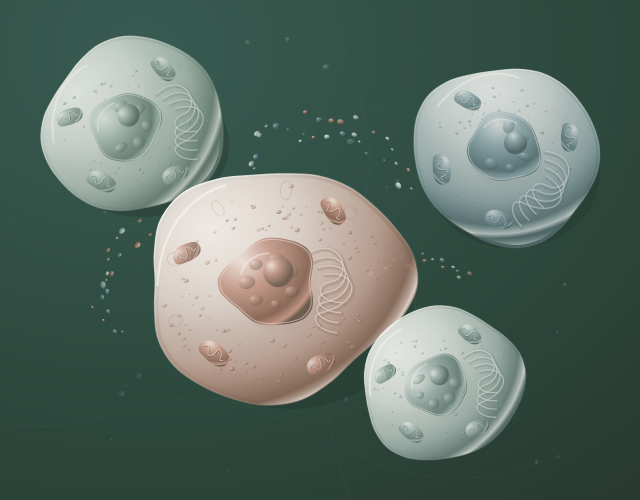
As we age, damaged cells stop clearing and start to linger. These senescent “zombie” cells release inflammatory signals that wear on the healthy tissue around them — the way one bad apple spoils the bunch.
Compounds that clear senescent cells are called senolytics. Procyanidin C1 is being studied for this activity.
50+
Peer-reviewed studies on procyanidins
Biology, 2026
A 2026 study tested NSPCC1, a grape-seed extract enriched with procyanidin C1, in aged mice.

Researchers reported reductions in markers of cellular senescence and inflammation in tissues from treated aged mice.
+13 weeks
Median survival after treatment began was 37 weeks with NSPCC1, compared with 24 weeks in the control group.
Aged mice receiving NSPCC1 had better-preserved limb grip strength than the control group.
This mouse study used a different formulation and a daily regimen. It does not establish lifespan benefits for people taking PCC1™. Read the 2026 study
The formula
We combine purified procyanidin C1, procyanidin B2 and epicatechin in a deliberately chosen ratio, with sunflower phospholipids to help absorption.
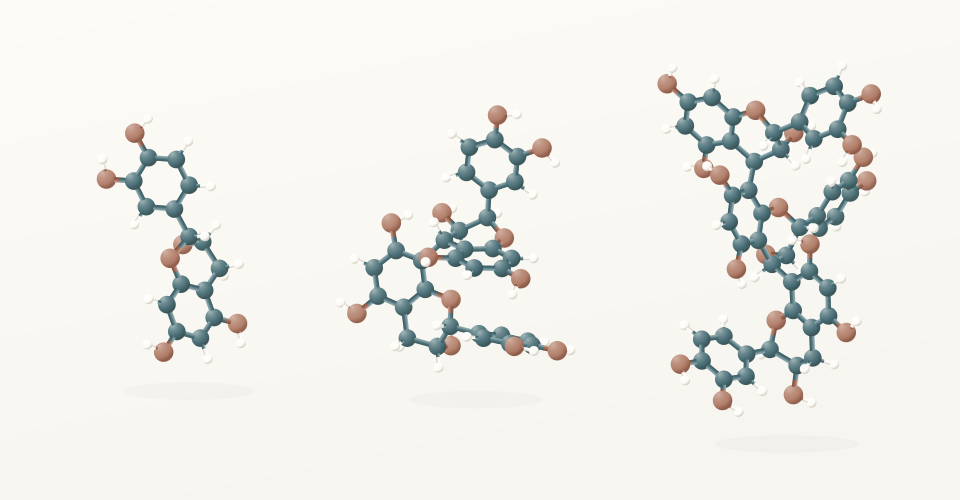
Trimer
The primary active. A grape-seed trimer studied for its effect on senescent cells.
Dimer
A dimer that works alongside C1. Abundant in cocoa and apples.
Monomer
A monomer that rounds out the blend. Found in dark chocolate and green tea.
Procyanidins are notoriously hard for the body to absorb, and high-dose botanical extracts are difficult to keep clean. PCC1™ uses a purified isolate in a phospholipid (phytosome) complex. In our measurements, that delivery format achieves about 5.7× better bioavailability than standard grape-seed extract.
The difference
Most procyanidin supplements are ground grape-seed extract in a capsule. PCC1™ takes a different route.
Laboratory reports for the tested material are published on the quality page.
The protocol
One box covers a 30-day cycle. Take PCC1™ for the first three days, then take twenty-seven days off before repeating.
Take one sachet (three capsules) with breakfast and water each day.
Take no PCC1™ for the next 27 days. Start your next box on day 31.
One 30-day cycle per box. Speak with a qualified healthcare professional if you take medication, have a medical condition, or are pregnant or breastfeeding.
One box is one 30-day cycle: three days on, twenty-seven days off.
PCC1™ is a food supplement, not a medicine, and is not intended to diagnose, treat, cure or prevent any disease.