
PCC1 vs grape-seed extract
Three named compounds. Three mornings per cycle. Published laboratory results.
Lonvi PCC1 combines procyanidin C1, procyanidin B2 and epicatechin in a phospholipid formula. A daily grape-seed extract adds a supplement to every day of the month. PCC1 puts its monthly routine into three consecutive mornings.
By Lonvi · Reviewed
Three mornings.
Then 27 days off.
Over a 30-day cycle, that is 27 fewer days with a scheduled dose than a daily-use grape-seed extract. A routine you can finish at the start of the cycle.
Lonvi PCC1
per 30-day cycle
Days 1–3: one sachet each morning with breakfast and water. Days 4–30: 27 days off.
Daily grape-seed extract
in the same window
A daily-use label means taking the product throughout the month, at the frequency its manufacturer specifies.
Check the daily-use examples
NOW Grape Seed 100 mg specifies one capsule twice daily with food. Solgar Grape Seed Extract 100 mg specifies one capsule up to twice daily, preferably with meals. These are named label examples, not a survey of every GSE product. The visual compares scheduled use days; formulations and amounts differ.
An OPC percentage
isn’t a C1 measurement.
“90% polyphenols” may look precise, but it does not tell you how much procyanidin C1 a product contains. C1 is a specific molecule. OPCs are a broader group of compounds.
Procyanidin C1
3 epicatechin units
Procyanidin B2
2 epicatechin units
Epicatechin
1 epicatechin unit
Schematic of epicatechin units per molecule; not ingredient proportions. C1 molecular record · B2 molecular record
Named compounds.
A phospholipid formulation.
Lonvi PCC1 combines all three compounds with phospholipids in a phytosome format. The two daily GSE examples above declare total polyphenols and do not list a phospholipid complex.
Compare the actual formulation. An extract’s total weight, an OPC percentage and a measured C1 content are different things.
Explore the PCC1 formula →Concentration alone
doesn’t prove purity.
A high polyphenol percentage tells you nothing about heavy metals. Demand the COA. Lonvi publishes original laboratory reports so you can check the tested material and its results before you buy.
SGS heavy-metal analysis
Lead · Arsenic · Cadmium · Mercury
The report identifies the phytosome material, sample lot, measured values and quantification limits. Its results apply to that named material sample.
Make every supplier show its working.
“Quality tested” is a claim. An original laboratory report gives you something to check. Hold any grape-seed extract you are considering to the same standard.
What the other published reports cover
Phytosome C1 content: Eurofins AAA02442 reports 2.8% C1 for lot WL20250305. Read the phytosome report.
Raw-material C1 content: Eurofins AAA02443 reports 96.0% C1 for lot SJ20250305. Read the raw-material report.
Both use HPLC-DAD. They measure different materials; neither is a finished-capsule percentage. The Quality page also provides the solvent report and the microbiology document, which SGS marks as preliminary. See all five documents and their scope.
What you are actually choosing.
A three-morning, phospholipid formula with named compounds and inspectable reports—or a daily grape-seed extract. Use the label and the evidence to decide.
Days of use
- Lonvi PCC1
- 3 consecutive mornings, then 27 days off.
- Daily GSE examples
- Daily use. NOW specifies twice a day; Solgar specifies up to twice a day.
Compounds
- Lonvi PCC1
- Procyanidin C1, procyanidin B2 and epicatechin are named in the formula.
- Daily GSE examples
- Both example labels state 90% total polyphenols. Neither lists a separate C1 amount.
Formulation
- Lonvi PCC1
- The three compounds are combined with phospholipids in a phytosome format.
- Daily GSE examples
- Neither example’s ingredient list specifies a phospholipid complex.
C1 measurement
- Lonvi PCC1
- Two published Eurofins reports separately measure C1 in raw-material and phytosome samples.
- Daily GSE examples
- A total-polyphenol or OPC percentage does not establish a C1 percentage.
Heavy metals
- Lonvi PCC1
- The published SGS report gives results for arsenic, lead, mercury and cadmium in a named phytosome sample.
- Daily GSE examples
- A polyphenol percentage says nothing about heavy metals. Ask for the actual results and sample lot.
| Detail | Lonvi PCC1 | Daily GSE examples |
|---|---|---|
| Days of use | 3 consecutive mornings, then 27 days off. | Daily use. NOW specifies twice a day; Solgar specifies up to twice a day. |
| Compounds | Procyanidin C1, procyanidin B2 and epicatechin are named in the formula. | Both example labels state 90% total polyphenols. Neither lists a separate C1 amount. |
| Formulation | The three compounds are combined with phospholipids in a phytosome format. | Neither example’s ingredient list specifies a phospholipid complex. |
| C1 measurement | Two published Eurofins reports separately measure C1 in raw-material and phytosome samples. | A total-polyphenol or OPC percentage does not establish a C1 percentage. |
| Heavy metals | The published SGS report gives results for arsenic, lead, mercury and cadmium in a named phytosome sample. | A polyphenol percentage says nothing about heavy metals. Ask for the actual results and sample lot. |
Label comparison: NOW Grape Seed 100 mg and Solgar Grape Seed Extract 100 mg, reviewed 14 September 2026.
Make room for
27 days off.
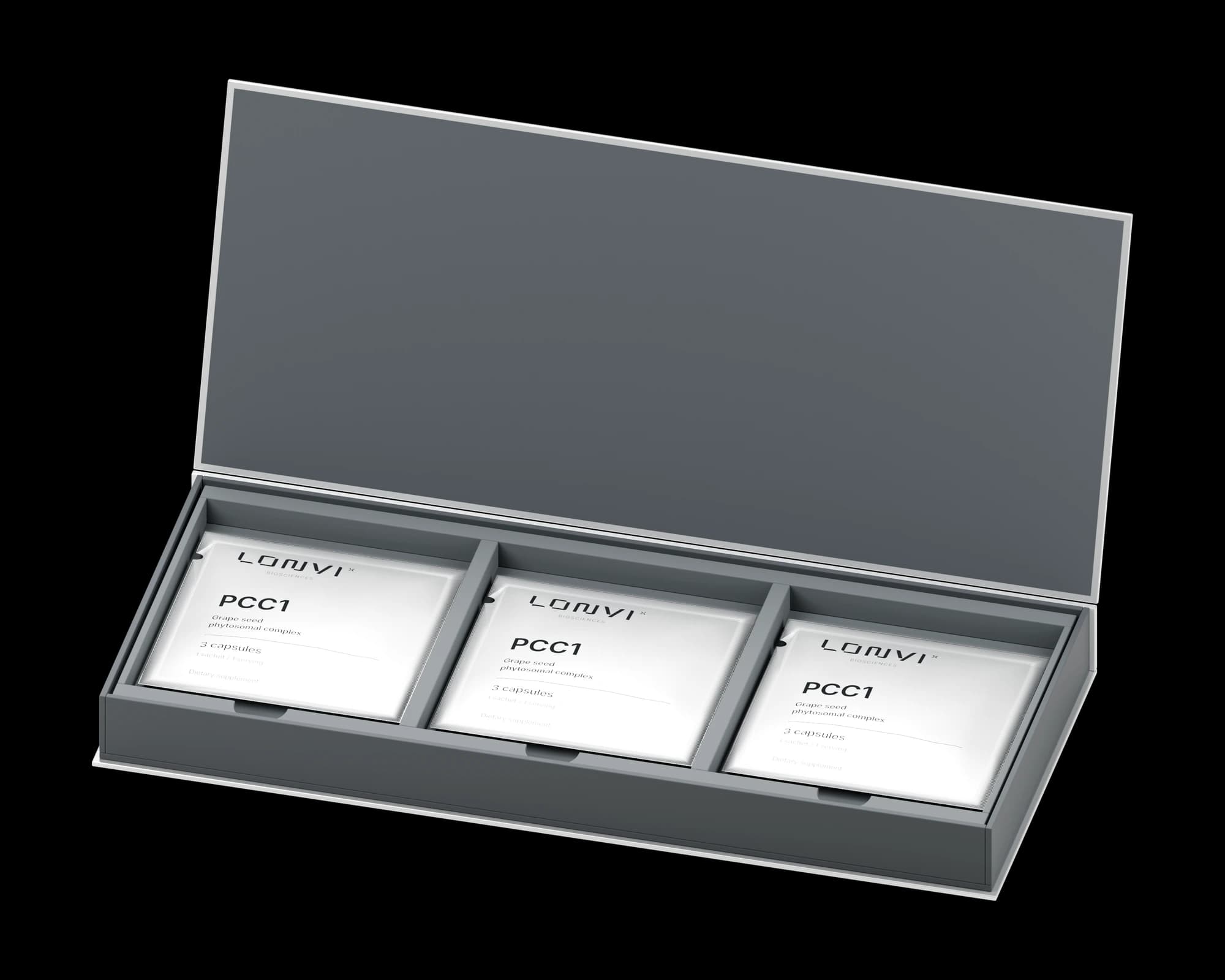
One box. Three sachets. Your 30-day PCC1 routine.
First order? Use WELCOME10.
Eligible first-time customers receive 10% off. The discount applies once, not to future subscription renewals.
90-day money-back guarantee, under the published shop policy.
Clinics and wholesale buyers: ask for private trade terms.
Lonvi PCC1 is a dietary supplement, not a medicine. It is not intended to diagnose, treat, cure or prevent disease. Follow your product label.